Choosing the right door mat is more than just a decorative decision—it significantly impacts your home’s safety, cleanliness, and overall durability against varying weather conditions. With a myriad of options available, understanding the fundamental differences between rubber backed door mats and traditional mats is crucial. This comprehensive guide will break down their key characteristics, helping you make an informed choice tailored to your home’s unique needs and the UK climate.
Understanding Door Mat Types: Rubber Backed vs. Traditional
Before diving into the specifics, let’s define the two primary categories of entrance mats we’ll explore. Rubber backed door mats represent a modern approach to home matting, engineered for performance and longevity. Traditional door mats, often crafted from natural fibres, offer a classic aesthetic and eco-friendly appeal. Both serve the essential purpose of keeping your home clean, but they achieve this through different designs and material compositions.
1. Key Advantages of Rubber Backed Door Mats for Modern Homes
Rubber backed door mats combine advanced design with practical functionality, making them an increasingly popular choice for UK households. These durable entrance mats feature a robust rubber base, typically bonded to high-quality surfaces such as carpet, coir, or synthetic fibres. This innovative base is designed to firmly grip the floor, effectively preventing slipping, bunching, or shifting, even on smooth or wet surfaces. Key benefits of these non-slip mats include:
- Superior Non-Slip Stability: The primary advantage is the rubber backing’s ability to ensure the mat stays securely in place, drastically reducing trip and slip hazards. This makes them ideal for high-traffic areas and homes with children or elderly residents, offering enhanced safety.
- Beveled Edges for Water Containment: Many modern rubber backed mats, particularly those designed for outdoor use or high moisture areas, often include raised or beveled edges. These act as a barrier, effectively holding water, mud, and debris on the mat, preventing puddles and protecting your precious indoor flooring from moisture damage.
- Enhanced Durability and Weather Resistance: Engineered from heavy-duty rubber, these mats are built to withstand heavy foot traffic, harsh weather conditions, and temperature fluctuations. They resist common issues like curling, cracking, and rotting, ensuring a long lifespan and consistent performance year-round, even in challenging environments like the British weather.
- Easy Maintenance: The impermeable rubber base is incredibly quick and easy to clean—simply hose it down or wipe it clean. The surface fibres can be vacuumed, shaken, or even machine-washed (depending on the specific mat), making upkeep simple and efficient, ensuring your entrance matting always looks its best.
Products like the rubber backed carpet mats available at Rugstars exemplify these features, offering a sleek, modern look with proven performance for busy UK homes. They are a smart investment in floor protection and home safety.
2. Natural Appeal and Benefits of Traditional Door Mats
Traditional door mats typically forgo synthetic backing, relying on natural fibres like coir (derived from coconut husk fibre), jute, or cotton. These mats have been a staple in homes for centuries, offering a distinct aesthetic and unique advantages:
- Eco-Friendly Materials: Coir mats, in particular, are celebrated for being biodegradable and sustainably sourced, appealing strongly to environmentally conscious homeowners looking for green home solutions.
- Excellent Dirt Scraping: Their coarse, fibrous texture is exceptionally effective at scraping dirt, mud, and grit from the soles of shoes, acting as a natural first line of defence against tracked-in debris.
- Moisture Absorption: Natural fibres possess inherent absorbent properties, soaking up water from wet footwear. This helps to reduce the amount of wetness and dampness tracked indoors, protecting your internal flooring.
- Aesthetic Warmth: Offering a rustic, classic, and inviting charm, traditional mats add a welcoming, earthy touch to home entrances, seamlessly blending with various decor styles, from farmhouse to bohemian.
While traditional mats generally lack the anti-slip properties of rubber backing, their ability to absorb moisture and efficiently catch debris makes them a solid choice for low-traffic areas, sheltered entryways, or as a decorative element in a porch or conservatory.
Comparison Table: Rubber Backed vs. Traditional Door Mats
To help you quickly weigh the pros and cons, here’s a comparative overview of rubber backed and traditional door mats across key performance indicators:
| Feature | Rubber Backed Door Mats | Traditional Door Mats |
|---|---|---|
| Non-Slip Stability | Excellent (rubber grip prevents slipping) | Limited (prone to shifting, trip hazard) |
| Durability & Lifespan | High (resists cracking, curling, rotting; UV & weather resistant) | Moderate (prone to fraying, mildew, degradation in damp conditions) |
| Moisture Management | Superior (traps water with raised edges, prevents floor damage) | Good (absorbs water, but lacks containment features) |
| Maintenance | Very Easy (hose down, wipe clean, vacuum) | Moderate (shake out, vacuum; may require drying) |
| Weather Resistance | Excellent (all-weather performance) | Moderate (best in sheltered areas; susceptible to prolonged dampness/sun) |
| Safety | High (reduces slip/trip risks significantly) | Lower (potential for slips/trips if mat shifts) |
| Cost (Initial) | Higher (due to advanced materials & construction) | Lower (cost-effective initial purchase) |
| Eco-Friendliness | Variable (depending on recycled content) | High (biodegradable natural fibres) |
| Aesthetics | Modern, sleek, functional | Rustic, classic, natural charm |
Deeper Dive into Performance: Safety, Durability, and Moisture Control
3. Safety and Performance: How Rubber Backing Enhances Functionality
Non-Slip Safety: A Critical Consideration
For any doorway, safety is paramount. Trials and real-world experience consistently show that rubber backed mats significantly reduce slip incidents by securely gripping the underlying floor surface. This firm adhesion is crucial in high-traffic or weather-exposed areas, where wet footwear, rain, or snow can quickly turn entryways into hazardous zones. The robust grip of the rubber base prevents the mat from sliding or buckling underfoot, offering reliable stability.
In stark contrast, traditional mats, which typically lack a non-slip base, are prone to shifting, sliding, and bunching. This instability dramatically increases the risk of trips and falls, especially on smooth surfaces like tiles, laminate, or polished wood. For households with young children, elderly residents, or in busy commercial settings, the peace of mind offered by the enhanced safety of rubber backed floor protection cannot be overstated. They are designed to stay flat and secure, providing a dependable surface for all.
Stability and Flatness Over Time
Over extended periods, particularly when exposed to moisture or fluctuating temperatures, traditional mats made of natural fibres may curl at the edges or warp, creating uneven surfaces. This not only diminishes their aesthetic appeal but also poses an ongoing tripping hazard. Rubber backed mats, engineered with a stable and durable base, are designed to maintain a consistently flat profile. This ensures safe, easy passage at all times and preserves the mat’s functionality and appearance throughout its lifespan.
4. Durability and Weather Resistance: Comparing Lifespan and Maintenance
When investing in a door mat, its longevity and ability to withstand the elements are key indicators of value. Rubber backed mats are specifically engineered for exceptional durability and long-term performance:
- Weather Toughness: These mats are highly resistant to the degrading effects of UV rays, heavy rain, snow, and freezing temperatures. The rubber material prevents fading, cracking, and decay, ensuring the mat retains its structural integrity and appearance even when exposed to the harshest outdoor conditions. They are built to last, providing consistent floor protection.
- Maintenance Simplicity: Rubber backed mats are incredibly easy to maintain. They can be quickly hosed down or wiped clean, and their non-porous backing prevents the absorption of water, which in turn inhibits the formation of mould or mildew underneath. This makes them ideal for busy homes where quick and efficient cleaning is a priority.
In contrast, traditional coir mats and other natural fibre mats require more careful consideration and protection from constant exposure to moisture and direct sunlight. While robust in their natural state, prolonged dampness can accelerate the degradation of natural fibres, leading to unsightly mildew, premature fraying, and significant fibre loss. This ultimately shortens their usable life, often necessitating more frequent replacements, especially in exposed outdoor settings common in the unpredictable UK weather.
5. Managing Moisture: Effective Water Control in Door Mats
Water ingress is a pervasive challenge for entryways, particularly in wet and damp climates like the UK, where rain is a frequent visitor. Effective moisture management is crucial not only for keeping homes clean but also for preventing potential damage to indoor flooring and reducing slip hazards.
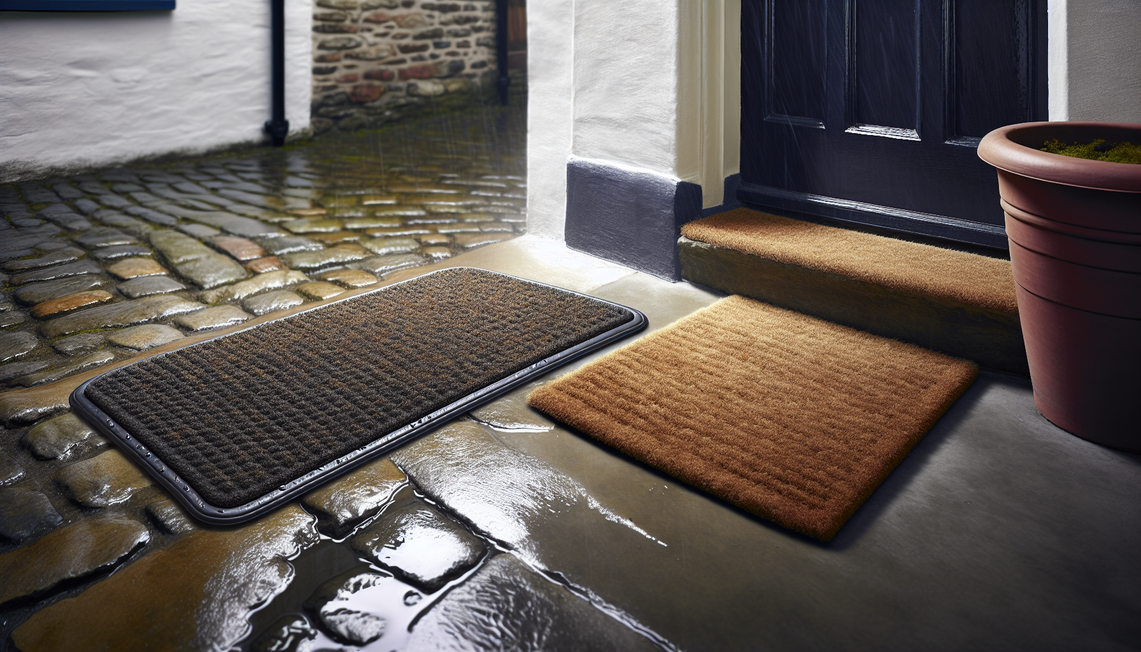
- Rubber Backed Mats: These advanced entrance mats are designed for superior moisture control. Their surface fibres (whether carpet or coir) efficiently absorb moisture from shoes. Critically, the impermeable rubber backing, often combined with raised or beveled edges, effectively traps and contains this water on the mat itself. This innovative design prevents excess moisture from seeping through to your floors, stopping puddling and providing excellent floor protection.
- Traditional Mats: While traditional mats made from natural fibres excel at absorbing water into their porous structure, they typically lack containment features. As the fibres become saturated, excess moisture can drip, spread, or even wick beyond the mat’s boundaries. This can potentially lead to damp patches on your flooring, increasing the risk of damage or creating new slip hazards just off the mat.
For optimal moisture management and robust floor protection in high-traffic or weather-exposed areas, rubber backed mats provide a significantly superior barrier solution, ensuring your home stays drier and safer.
6. Cost Analysis: Balancing Initial Price Against Long-Term Value
The decision between rubber backed and traditional door mats often comes down to balancing initial investment against long-term value and performance. Understanding the full cost picture is essential for budget-conscious buyers.
- Rubber Backed Mats: These mats typically come with a higher upfront cost. This is due to their advanced construction quality, durable materials, and engineering designed for longevity and superior performance. However, this initial investment often yields an excellent return over time. Given their exceptional durability, enhanced safety features (reducing slip/trip risks), and lower frequency of replacement, they often prove to be more cost-effective in the long run. They save money on replacements, potential floor repairs from moisture damage, and reduce the risk of costly slip-and-fall incidents.
- Traditional Mats: Characterised by a lower initial purchase price, traditional mats appear more budget-friendly at first glance. However, this perceived saving can be deceptive. In exposed outdoor settings or high-traffic areas, they may require replacement every 6 to 12 months due to wear and tear, mould, or general degradation. Furthermore, their lack of advanced floor protection and non-slip features can lead to hidden costs. These include potential expenses for floor damage from moisture, or even medical and liability costs from accidents caused by slipping.
When factoring in the entire lifecycle, the unparalleled safety benefits, and the ease of maintenance, rubber backed door mats generally deliver better overall value for most households, especially for those seeking a reliable and long-lasting entrance matting solution.
Tailoring Your Door Mat Choice to Your Home’s Needs and Environment
The ideal door mat for your home depends heavily on your specific needs, environment, and priorities. Consider the following when making your selection:
Consider Rubber Backed Mats If You:
- Have high foot traffic at your entrances, common in busy family homes, offices, or retail premises.
- Live in a wet or variable climate, like much of the UK, requiring reliable all-weather mats.
- Prioritise safety above all, especially where young children, elderly residents, or individuals with mobility challenges are present.
- Are looking for low-maintenance, long-lasting matting solutions that offer superior floor protection.
- Need a mat for outdoor exposed areas that will withstand the elements without degrading.
Consider Traditional Mats If You:
- Prefer natural, eco-friendly materials with a rustic, classic, or welcoming charm.
- Have sheltered or covered entrance areas with minimal direct weather exposure, protecting the mat from constant dampness or harsh sun.
- Are on a limited budget for the initial purchase and are willing to replace mats more frequently.
- Wish to add a personalised or highly decorative element via custom coir designs that aren’t available with rubber options.
- Require a mat primarily for effective dirt scraping rather than sophisticated moisture containment.
Final Thoughts
Both rubber backed and traditional door mats play important roles depending on the use case and environment. While traditional mats offer natural beauty and eco-friendly benefits suited for low-intensity, protected areas, rubber backed mats consistently lead when safety, durability, weather resistance, and effective floor protection are the primary priorities. This makes them the ideal choice for the vast majority of modern UK homes and high-traffic entrances.
By investing in the right entrance mat, you not only enhance your home’s first impression but also actively protect your floors and family. Explore high-quality rubber backed options like the durable rubber backed carpet mats at Rugstars to elevate your home’s entrance with lasting safety, exceptional functionality, and contemporary style. Choose your perfect door mat today and step into a cleaner, safer home!
Frequently Asked Questions About Door Mats
Here are some common questions to help you further understand and choose the best door mat for your home:
What makes rubber backed door mats safer than traditional mats?
Rubber backed door mats are inherently safer due to their non-slip rubber base, which firmly grips the floor. This prevents the mat from shifting, sliding, or bunching, significantly reducing the risk of trips and falls, especially on smooth or wet surfaces. Traditional mats, lacking this anti-slip backing, are more prone to movement, increasing safety hazards.
Are traditional coir mats truly eco-friendly?
Yes, traditional coir mats are considered highly eco-friendly. They are made from natural fibres derived from coconut husks, a renewable and sustainable resource. Coir is biodegradable, meaning it will naturally decompose at the end of its life cycle, making it an excellent choice for environmentally conscious consumers.
How do rubber backed mats prevent water from reaching my floor?
Rubber backed mats effectively prevent water from reaching your floor in two ways: their surface fibres absorb moisture from shoes, and critically, their impermeable rubber backing often features raised or beveled edges. These edges create a containment barrier, trapping excess water, mud, and debris on the mat itself, preventing it from seeping onto and damaging your underlying flooring.
Can rubber backed door mats be used outdoors in all weather conditions?
Absolutely. Rubber backed door mats are specifically engineered for high durability and weather resistance. Their robust rubber material makes them resistant to UV rays, heavy rain, snow, and freezing temperatures. They will not crack, curl, or rot, making them an ideal all-weather solution for outdoor exposed entryways in the UK climate, ensuring consistent performance year-round.
Is the higher cost of a rubber backed mat justified by its benefits?
Yes, the higher initial cost of a rubber backed mat is generally justified by its long-term value. While more expensive upfront, their superior durability, enhanced safety features (reducing slip/trip risks), and excellent floor protection capabilities mean they last significantly longer and require fewer replacements than traditional mats. This translates to lower overall costs over time, in addition to providing peace of mind and greater convenience.