🎯 Quick Answer
A non-slip shower mat should be replaced every 6-12 months with heavy use or every 1-2 years with typical use, especially when you notice signs of wear like curling edges, loss of suction, or persistent mould. This is crucial for maintaining safety in UK homes and preventing accidents.
- Key Signs: Look for physical damage (cracks, stiffness), reduced grip, and hygiene issues (stains, odours).
- Safety First: An old mat is a significant slip hazard, particularly for children and the elderly.
- UK-Specific Factors: Hard water and damp conditions in many UK bathrooms can accelerate material degradation.
Continue reading our comprehensive UK buyer’s guide to learn how to choose a durable, safe, and long-lasting replacement.
Is your shower mat still keeping you and your family safe, or has it become a hidden bathroom hazard? This simple item is a frontline defence against slips and falls, but like any safety product, it degrades over time and loses its effectiveness. The primary question for many UK homeowners is how often it needs changing. Most experts agree that non-slip shower mats should be replaced every 1-2 years, but factors unique to UK homes—like hard water and damp bathrooms—can shorten this lifespan considerably.
This guide will walk you through the critical signs that it’s time for a replacement, the evolving safety needs of your household, and how to choose a durable, hygienic, and cost-effective new mat. As you read our When to Replace Your Non-Slip Shower Mat: UK Buyer’s Guide, you’ll gain the confidence to make an informed decision that protects your home. At Rugstars UK, we are authorities on functional home textiles, committed to providing safe and long-lasting solutions for British homeowners, ensuring every product meets the highest standards overseen by bodies like the Office for Product Safety and Standards (OPSS).[5]
👤 Written by: Ashley Reviewed by: The Home Safety Experts at Rugstars UK Last updated: 27 February 2026
ℹ️ Transparency: This article explores non-slip shower mat safety and replacement based on UK safety guidelines and expert advice. Some links may connect to our products. All information is reviewed by our in-house experts to ensure it is accurate and helpful.
The Lifespan of Your Non-Slip Shower Mat in the UK
In general, a quality non-slip shower mat lasts between one to two years under typical conditions. However, this is not a fixed rule. The actual answer to how often replace shower mat depends heavily on usage and environment. A mat in a single person’s flat may last the full two years, whereas one in a busy family bathroom with multiple daily showers might show signs of wear in as little as 6 to 12 months. Understanding what shortens this lifespan is key to knowing when to act.
Several factors common in British homes can accelerate shower mat material degradation and impact how long do shower mats last uk:
- Hard Water: Many regions across the UK have hard water, which is high in mineral content like calcium and magnesium. These minerals can build up on the mat’s surface and within its suction cups, causing the material to become stiff, brittle, and less effective at gripping the shower tray.
- Ventilation: Older UK properties, in particular, may have bathrooms with limited ventilation. This creates a consistently damp environment, which is an ideal breeding ground for mould and mildew. This constant moisture not only presents a hygiene issue but also contributes to the breakdown of rubber and PVC materials over time.
- Cleaning Frequency & Methods: Infrequent cleaning allows soap scum, body oils, and bacteria to accumulate, which can degrade the mat’s surface and clog drainage holes. Conversely, using overly harsh chemical cleaners or abrasive scrubbers can strip away anti-mould coatings and damage the material, reducing its flexibility and grip.
- Material Quality: The initial quality of the mat plays a significant role. Inexpensive, thin mats made from low-grade materials are more susceptible to cracking, warping, and losing suction power quickly. Investing in a durable, high-quality mat is often more cost-effective in the long run.
While one to two years is a useful benchmark, the most reliable indicators for replacement are the visual and functional signs of wear. For a broader overview of bathroom safety, see our complete UK Home Safety Guide. The next section will detail exactly what those warning signs are, helping you move beyond guesswork to make a confident safety decision.
7 Critical Signs Your Shower Mat Needs Replacing
Beyond its age, your shower mat will give you clear physical clues when it’s time for a replacement. Ignoring these signs of wear non-slip shower mat can compromise both the safety and hygiene of your bathroom, turning a safety device into a liability. Look out for these seven critical indicators.
- Curling or Warped Edges: When the edges of your mat no longer lie flat against the shower floor, it creates a serious trip hazard. A
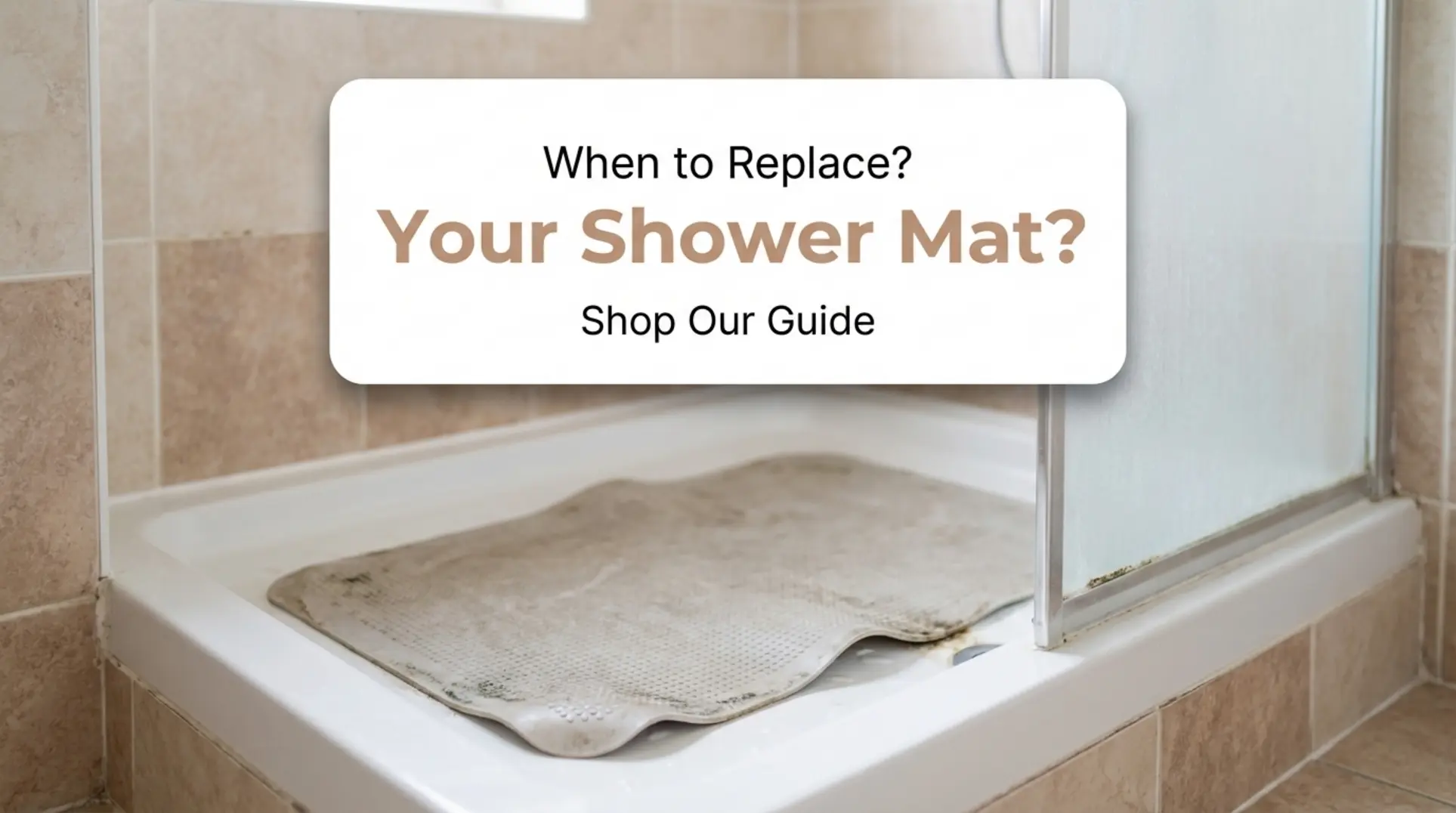
curling shower mat hazardis especially dangerous when stepping into or out of the shower. This warping indicates the material has lost its structural integrity. - Cracked or Brittle Material: Inspect the surface and underside of the mat. If you see small cracks, stiffness, or find that the material feels brittle rather than flexible, it’s a clear sign of degradation. These cracks can harbour bacteria and signify that the mat has lost its pliable grip.
- Loss of Suction: This is one of the most immediate
old shower mat dangers. Turn the mat over and check the suction cups. If they appear flattened, damaged, or no longer create a strong seal with the shower floor, the mat can easily shift underfoot. If you’re wondering how to fixsuction cups not sticking shower mat, the most reliable solution is replacement. - Visible Mould or Mildew Stains: Small spots of mould can often be cleaned, but if you notice persistent black, pink, or orange stains that remain after a thorough scrubbing, it suggests the mould has penetrated deep into the material. At this point, it becomes a significant hygiene concern.
- Persistent Odours: A musty, damp smell that lingers even after the mat has been cleaned and dried is a strong indicator of deep-seated bacteria and mould growth within the pores of the material.
- Fading or Discolouration: While partly an aesthetic issue, significant fading or yellowing can be a sign of material breakdown caused by exposure to cleaning products, soap scum, and UV light over time.
- Slippery Surface: The primary function of the mat is to provide a textured, non-slip surface. Over hundreds of uses, this texture can wear smooth. If the top of the mat itself feels slick to the touch, it has lost its effectiveness and is no longer providing adequate protection.
If you notice one or more of these signs, it’s time to prioritise your family’s safety and invest in a new mat. Many of these issues can be accelerated by common errors, so understanding proper care is just as important as knowing when to replace it.
Evolving Safety & Health Needs in UK Bathrooms
A shower mat’s performance isn’t static; its suitability must be judged against the evolving safety and health needs of your household. A mat that was perfectly adequate for a young couple might become a significant risk when a toddler starts walking or an elderly parent moves in. This nuanced, human-centric understanding of safety is where generic advice often falls short.
Adapting to Changing Household Safety Needs
Preventing falls in the home is a key focus of public health bodies like the UK Health and Safety Executive (HSE), and the bathroom is a high-risk area.[4] The safety requirements within that space can change overnight.
- For the Elderly: As we age, balance and mobility can decline, making a slip in the shower potentially devastating. A degraded mat with even slightly reduced grip is a major fall risk. For older individuals, a mat with maximum surface coverage and an uncompromised, dense pattern of suction cups is not a luxury—it’s an essential safety measure.
- For Young Children: Toddlers and young children are naturally unsteady on their feet. A mat that shifts even a centimetre can be enough to cause a fall. The security of
non slip shower mats for children ukis paramount, demanding a product that stays firmly anchored from the moment they step in until they are safely out. - For Temporary Injuries or Recovery: Anyone recovering from surgery, a sports injury, or dealing with a temporary mobility issue requires heightened bathroom safety. During these periods, a reliable, high-grip mat is critical to support a safe and speedy recovery. In the often compact layouts of UK bathrooms, a single slip can easily result in a serious impact injury.
UK-Specific Health & Hygiene Implications
The conversation about an old shower mat must go beyond “mould” and into the specific health risks present in many damp UK bathrooms. An old, porous mat can become a reservoir for microorganisms.
There are clear hygiene concerns non-slip shower mat owners should know. As experts at Allergy UK explain, the damp conditions found in many bathrooms create a perfect breeding ground for mould and mites, which can trigger respiratory issues like asthma and skin conditions such as eczema.[2] The cracks and worn surfaces of an old mat provide an ideal habitat for these allergens to thrive. This is backed by guidance from NHS trusts like Cambridge University Hospitals, which recommend controlling dampness and mould to protect respiratory health, especially for vulnerable individuals.[3] The potential for bacteria on shower mat health risks is real, as a worn-out mat is much harder to clean effectively, allowing biofilms to develop.
Environmental Responsibility & Making a Sustainable Choice
The “throwaway culture” associated with cheap, poor-quality household goods has a significant environmental cost. Choosing a shower mat is a small but meaningful opportunity to make a more responsible decision. According to a 2024 report from the UK-based charity WRAP, UK households discarded over 700,000 tonnes of textiles in general waste in 2021, highlighting the environmental cost of short-lived products.[1]
Frequently replacing a flimsy, low-cost mat contributes directly to this waste stream. Opting for a durable non-slip shower mat uk is not only a better investment for your safety and wallet but also a more sustainable choice. A well-made mat designed to withstand UK conditions lasts longer, reducing the frequency of replacement and the amount of waste sent to landfill. It’s a practical decision that aligns cost-effectiveness with environmental responsibility.
Your UK Buyer’s Guide: Choosing a New Non-Slip Shower Mat
When choosing a replacement, it’s essential to select a mat that solves the problems your old one had, from poor grip to hygiene issues. This guide will help you assess materials, design, and value to make the best choice for your UK home, focusing on the key elements of choosing a new non-slip shower mat uk.
Material Matters for UK Conditions
The material is the foundation of a mat’s performance and longevity. A shower mat materials comparison uk reveals a few top contenders:
- High-Quality PVC: A great all-rounder, modern PVC is durable, flexible, and offers good grip. Look for options treated with anti-mould and anti-bacterial agents for enhanced hygiene in damp UK bathrooms.
- Natural Rubber: Known for its excellent grip and durability, natural rubber is a robust choice. It can be susceptible to degradation from harsh chemical cleaners, so it’s best maintained with gentle, eco-friendly solutions.
- Silicone: A premium option, silicone is highly durable, resistant to high temperatures, and naturally resistant to mould and bacteria, making it an extremely hygienic choice.
Key Design Features for Safety and Hygiene
Beyond the material, specific design elements separate a mediocre mat from a great one:
- Robust Suction Cups: More is often better. A dense pattern of strong, well-formed suction cups is critical for creating a powerful seal that prevents any shifting. This is a top consideration for the
best non slip shower mat for elderly uk. - Effective Drainage: Adequate drainage holes are essential for allowing water to pass through quickly, preventing pooling on the surface and reducing the risk of mould growth underneath. This is key for
mould on shower mat prevention uk. - Machine Washable: For ultimate convenience and hygiene, choose a mat that is machine washable. A regular cycle in the washing machine can remove soap scum and bacteria far more effectively than manual scrubbing.
Size and Fit for UK Showers
An ill-fitting mat can be a hazard. Before buying, measure your shower tray. Common UK sizes include compact square trays (e.g., 800x800mm), rectangular trays for walk-in showers, and curved quadrant trays for corner units. Choose a size that provides maximum coverage without obstructing the drain or curling up the sides.
Value vs. Initial Cost
It can be tempting to opt for the cheapest mat available, but this is often false economy. A slightly more expensive, durable non-slip shower mat uk that lasts two or three times longer and provides superior safety is far better value. View the purchase as a small investment in your family’s health and safety.
At Rugstars UK, our non-slip shower mats are designed with these principles in mind, focusing on durable materials, maximum suction, and hygienic designs to offer long-term safety and value for UK families.
Explore our range of functional and durable non-slip shower mats.
Frequently Asked Questions
When should you replace your shower mat?
You should replace your non-slip shower mat every 1-2 years, or more frequently (every 6-12 months) if it’s in a busy family bathroom. Look for key warning signs like curling edges, cracks in the material, suction cups that no longer stick, or mould stains that can’t be cleaned. A worn-out mat is a serious slip hazard, so it’s always better to replace it proactively for safety.
How often should I clean a non-slip shower mat?
You should clean your non-slip shower mat at least once a week to prevent the build-up of soap scum, mould, and bacteria. After each use, hang it to dry completely. For the weekly clean, scrub it with a gentle bathroom cleaner or a vinegar solution and rinse thoroughly. Many modern mats are machine washable, which is an excellent option for a deep clean every few weeks.
How long do bath mats last?
The lifespan of a bath mat depends on its material and usage, but a good quality non-slip shower mat typically lasts 1-2 years. Cheaper, lower-quality mats may only last 6 months before they become unsafe. Factors in UK homes like hard water and high humidity can accelerate wear. Always prioritize replacing it when you see signs of physical degradation, regardless of age.
What to look for in a shower mat?
When buying a shower mat, look for strong suction cups for grip, effective drainage holes to prevent mould, and a durable, non-porous material like high-quality PVC, rubber, or silicone. Ensure it is the correct size for your shower and is machine washable for easy cleaning. For elderly users or children, consider mats with a textured surface for extra grip.
Why do shower mats go mouldy?
Shower mats go mouldy because they exist in a consistently warm, damp, and dark environment—the perfect breeding ground for mould and mildew. Soap scum and skin cells provide a food source, and if the mat isn’t drained and dried properly after each use, mould can quickly take hold, especially in poorly ventilated UK bathrooms.
Are shower mats necessary?
Yes, for most households, non-slip shower mats are a necessary safety device to prevent dangerous slips and falls on wet, smooth surfaces. While some modern shower trays have textured surfaces, a quality mat provides superior grip. They are especially crucial for homes with children, elderly individuals, or anyone with mobility issues, significantly reducing the risk of bathroom accidents.
What is the best non-slip surface for a shower?
The best non-slip surface is one that combines a textured material with a strong suction mechanism. A high-quality rubber or PVC shower mat with numerous, powerful suction cups offers excellent grip. The textured surface provides traction for your feet, while the suction cups anchor the mat securely to the shower floor, preventing it from shifting underfoot.
What can I use instead of a shower mat?
Alternatives to a traditional shower mat include applying non-slip adhesive strips or decals directly to the shower floor or using a permanent non-slip coating or spray. Some people also opt for naturally resistant materials like diatomaceous earth mats outside the shower. However, for in-shower use, a high-quality, removable mat often provides the most effective, hygienic, and easily maintained solution.
What can I put in my shower to not slip?
The most effective item to put in your shower to prevent slipping is a high-quality non-slip shower mat with strong suction cups. This provides a secure, textured surface to stand on. Alternatively, you can apply adhesive non-slip stickers or treads to the shower base. For a permanent solution, you could have a professional apply a textured, anti-slip coating.
Best non slip shower mat for elderly uk?
The best non-slip shower mat for the elderly in the UK should offer maximum coverage, a high-traction textured surface, and a dense pattern of powerful suction cups. Look for mats made from high-grade rubber or PVC that adhere firmly and do not curl at the edges. A longer, rectangular mat is often a good choice for full coverage in walk-in showers or shower-bath combinations.
Limitations, Alternatives & Professional Guidance
To provide a balanced and trustworthy perspective, it’s important to acknowledge the limitations of general advice and consider other available options.
Material & Research Limitations
While materials like high-grade PVC and natural rubber are generally associated with greater durability, their exact lifespan is heavily influenced by individual household conditions. Factors such as local water chemistry, the specific cleaning products used, and the frequency of use can all impact material degradation. It should be noted that large-scale scientific studies on the degradation rates of domestic shower mats are limited; therefore, recommendations are primarily based on extensive industry experience, material science principles, and manufacturer guidance.
Alternative Approaches
A removable shower mat is not the only solution for preventing slips. Permanent non-slip coatings can be professionally applied to a shower tray, offering a seamless and texture-integrated finish. Another option is adhesive non-slip treads or decals. Coatings can be an excellent long-term solution but may be costly to install and cannot be changed. Treads are more affordable but can peel at the edges over time and may be difficult to clean around thoroughly, potentially trapping soap scum and mildew. A high-quality mat offers a versatile, effective, and easily replaceable solution.
Professional Consultation
For households with individuals who have significant mobility challenges, chronic balance issues, or specific accessibility needs, consulting a professional is highly recommended. An occupational therapist can conduct a home safety assessment and provide personalised recommendations. Their advice may include specific types of mats, grab bars, shower seats, and other assistive devices to create the safest possible bathroom environment tailored to individual needs.
Conclusion
Recapping the key takeaways, it is advisable to replace your non-slip shower mat every 1-2 years, or sooner if it shows clear signs of wear. Prioritising safety means regularly checking for hazardous curling edges, cracked material, and a loss of suction power. In tandem, maintaining hygiene and longevity through regular cleaning and proper drying is crucial. Making an informed choice by following our When to Replace Your Non-Slip Shower Mat: UK Buyer’s Guide is a simple but powerful step towards creating a safer and healthier home for you and your family.
A reliable non-slip shower mat is an investment in your family’s well-being. At Rugstars UK, we are committed to providing durable, functional, and thoughtfully designed mats that meet the demands of UK households. We understand the unique challenges of British bathrooms, from hard water to damp conditions, and our products are designed to offer lasting performance and peace of mind. Discover our collection of non-slip shower mats and find the perfect fit for your bathroom today.
References
- WRAP. (2024). Textiles Market Situation Report 2024. The Waste and Resources Action Programme.
- Allergy UK. (n.d.). House Dust Mite Allergy Factsheet.
- Cambridge University Hospitals NHS Foundation Trust. (n.d.). Dust mites in your home. Patient Information.
- Health and Safety Executive (HSE). (n.d.). Textiles.
- GOV.UK. (n.d.). Office for Product Safety and Standards (OPSS).