Ironing bed sheets offers much more than a visually neat appearance. In the UK’s often damp and variable climate, ironing plays a vital role in maintaining bed hygiene and promoting better sleep.
Why Ironing Bed Sheets Matters: Enhancing Comfort and Hygiene
Ironing your bed sheets is essential not only to keep them looking crisp but also to improve hygiene and comfort. The UK’s relatively humid and damp environment means sheets are prone to retaining moisture, which can foster bacteria, mould, and dust mites. Applying heat through ironing effectively kills many of these allergens, making it particularly beneficial for allergy sufferers and those seeking a cleaner sleep environment.
Additionally, wrinkle-free sheets reduce skin irritation and enhance comfort, allowing you to relax quickly and enjoy deeper, uninterrupted sleep. Understanding the interaction between the UK’s climate, common bedding fabrics such as cotton, linen, and cotton blends, and ironing methods helps maintain your sheets’ quality and longevity.
Essential Ironing Tools for Perfectly Pressed Sheets
Using the right tools tailored to UK conditions ensures successful ironing every time:
Choosing the Right Iron
- Steam Irons: Preferred in UK households for their efficient crease removal and sanitising properties. Reliable UK brands like Tefal, Philips, and Russell Hobbs offer models featuring adjustable temperature settings and anti-scale capabilities that help deal with hard water deposits.
- Dry Irons: Offer better control for delicate or synthetic fabrics that may scorch under moisture and higher temperatures.
Supporting Equipment
- Wide ironing board: A large, smooth, heat-resistant surface accommodates bulky sheets without generating additional creases.
- Spray bottle: Filled with clean or distilled water, or wrinkle-release solutions, to dampen stubborn folds.
- Heat-resistant gloves: To safely reposition fabric around the iron, protecting your hands.
Step-by-Step Techniques: How to Iron Bed Sheets Like a Pro
Follow these expert steps for a crisp, damage-free finish:
Preparation
Always wash sheets following their care labels and remove them promptly from the dryer to avoid set-in wrinkles. For cotton and linen sheets, ironing when they are still slightly damp is ideal as it relaxes fibres, making it easier to smooth creases.
Folding and Ironing Order
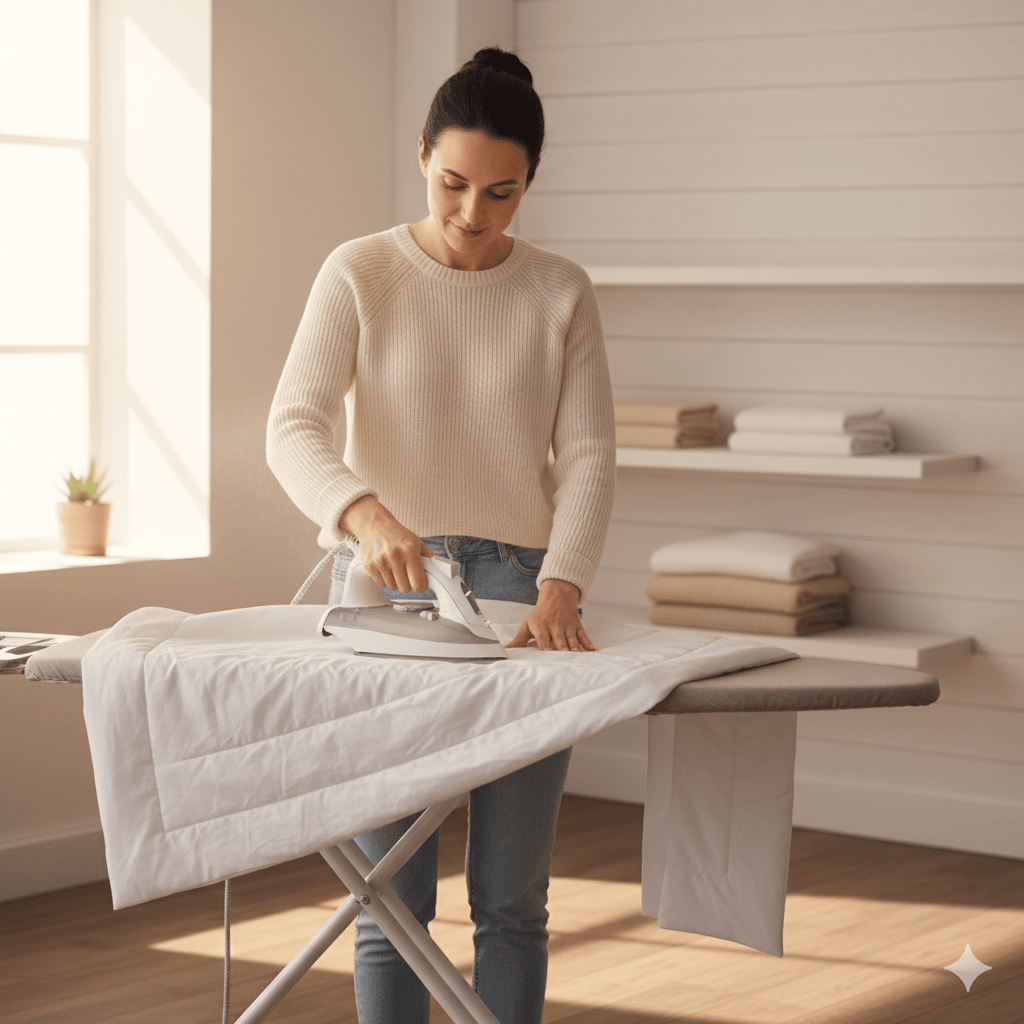
- Flat Sheets: Fold your sheet into sections around one metre wide to make it manageable. Iron each section systematically from one end to the other.
- Fitted Sheets: Begin with elasticated corners to smooth the tightest areas, then move to flatten the remaining fabric carefully to prevent new creases forming.
Avoiding Creases
Use smooth, even strokes with firm but gentle pressure. Avoid pulling or stretching fabric excessively as this can distort the weave and cause unevenness.
Fabric-Specific Ironing Tips for Common UK Bed Sheet Materials
Different materials respond best to tailored ironing techniques:
Cotton
Use high heat combined with steam. Iron while sheets are slightly damp to relax fibres and quickly remove wrinkles.
Linen
Apply lower heat and use a protective press cloth to avoid shiny marks. Iron on the reverse side when possible, and avoid over-drying as it stiffens the fabric.
Polyester and Blends
Use low to medium heat to prevent melting or glossing. Avoid steam on pure polyester, but if dealing with blends containing cotton, lightly spray with water.
Organic Fabrics
Opt for eco-friendly ironing products and natural starch alternatives like wheat starch spray. Always adhere to the fabric care instructions to preserve fibre quality.
Time-Saving Shortcuts Without Sacrificing Quality
- Iron sheets while slightly damp to reduce overall ironing time and effort.
- Use spray starch or wrinkle-release sprays sparingly to ease smoothing and maintain crispness without stiffness.
- Fold and iron in sections using the wider ironing board end to minimise fabric repositioning.
Troubleshooting Common Ironing Challenges Specific to UK Homes
Hard Water and Mineral Build-Up
Hard water in many parts of the UK causes scale deposits inside irons that reduce steam output and can stain fabrics. Using distilled water and regular descaling with manufacturer-approved products keeps your iron performing optimally.
Ironing Bed sheets in Humid Weather
High humidity makes ironing tougher by adding ambient moisture. Iron in a well-ventilated room and avoid ironing sheets that have absorbed excess moisture from the environment.
Equipment Maintenance
Keep the ironing board cover clean and replace it when worn to prevent snagging. Store the iron upright when not in use and clean the soleplate regularly to avoid fabric damage and uneven heat distribution.
Comparison of Iron Types for UK Bed Sheets
| Iron Type | Pros | Cons | Recommended For |
|---|---|---|---|
| Steam Iron | Efficient wrinkle removal; kills bacteria; good for cotton and linen | Needs maintenance due to scale; not ideal for delicate synthetics | Most UK households; standard cotton and linen sheets |
| Dry Iron | Precise heat control; safer for delicate fabrics; no moisture damage | Less effective for tough creases; slower | Delicate synthetic blends; fine linens |
| Steam Generator Iron | Very powerful steam production; great for large volumes | Higher cost and bulky; requires storage space | Heavy users; professional-quality ironing |
Frequently Asked Questions About Ironing Bed Sheets in the UK
How often should I iron my bed sheets?
Ironing after every wash is ideal for maintaining hygiene and comfort, especially in humid UK climates. However, if sheets are promptly dried and stored properly, ironing every few washes is acceptable.
Can I iron all types of bedding safely?
Most cotton, linen, and cotton-blend sheets are safe with correct temperature settings. Always check care labels to avoid damage to delicate synthetics.
What are the best eco-friendly ironing products available in the UK?
Brands like Ecover provide eco-friendly starch and fabric sprays. Using distilled water and natural starch alternatives supports environmentally conscious ironing.
How do I prevent scorching or burning delicate fabrics?
Use the appropriate temperature, test on an inconspicuous area, and employ a pressing cloth whenever needed.
Are there alternatives to ironing for wrinkle-free sheets?
While tumble drying with dryer balls and using wrinkle-release sprays can help, ironing remains the most effective way to achieve fresh, crisp, and allergen-free sheets.
For high-quality sheets designed for durability and ease of care in UK homes, explore the selection of Rugstars UK Flat Sheets.
By following these expert tips and understanding fabric-specific requirements, UK households can enjoy beautifully pressed, hygienic bed sheets that elevate comfort and extend fabric lifespan, ensuring a better night’s sleep all year round.