Choosing the perfect rug can dramatically elevate your UK home’s aesthetic and comfort. Beyond adding style and colour, a well-chosen rug enhances room acoustics by absorbing sound in often echo-prone spaces like open-plan living rooms. Additionally, rugs provide a layer of insulation, which helps retain heat, reducing heating costs by up to £85 annually — a welcome saving given the UK’s variable climate and energy prices.
Transform Your Space: Why Choosing the Right Rug Matters in UK Homes
A rug also defines and anchors furniture layouts, making rooms feel cohesive and inviting. Whether it’s adding warmth underfoot on cold mornings or softening a minimalist design, your rug is a foundation of home comfort and style.
Tailored to Your Space: Understanding Standard UK Room Dimensions
Before selecting a rug, understanding standard UK room sizes is crucial:
- Living Rooms: Typically range from 15-25 square metres, often around 4m x 5m.
- Dining Areas: Generally smaller, averaging 3m x 4m.
- Bedrooms: Vary widely, singles around 2.5m x 3.5m, doubles at 3m x 4m or larger.
- Hallways & Staircases: Narrower spaces, often 90cm to 1.2m wide for hallways.
Accurately measuring your room ensures the rug complements rather than overwhelms the space. For example, leaving a margin of 20-60cm between the rug edge and walls creates an airy layout, while sizing affects furniture placement and visual balance.
Room-by-Room Rug Selection: Best Sizes, Materials & Styles for UK Homes
Living Room
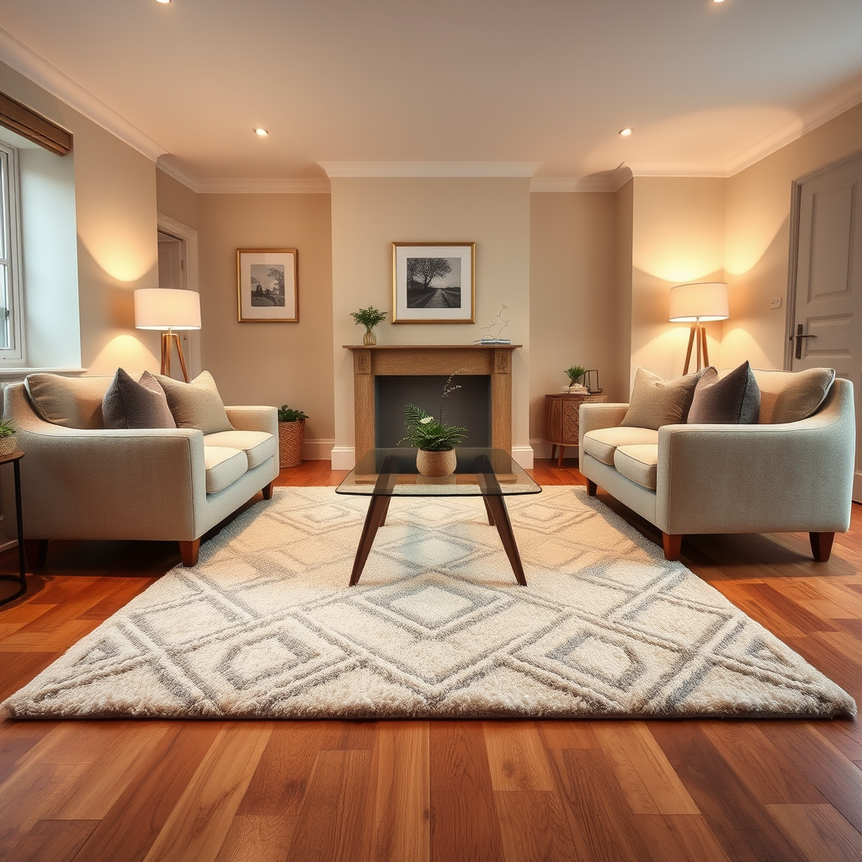
Opt for durable wool blends, popular in UK homes for their softness, resilience, and natural stain resistance. Wool also retains warmth and absorbs sound, ideal for busy family settings. Consider geometric patterns for a modern look or subtle traditional motifs for timeless charm. A standard size, like 8x10ft (approx. 240cm x 300cm), fits most UK living rooms, allowing furniture to sit on or partially on the rug.
Dining Room
Choose rugs that extend about 60cm beyond all sides of the table to accommodate chairs even when pulled out. Materials like cotton, jute, or flatwoven styles are favoured for their easy cleanability and durability against food spills. Rectangular rugs suit rectangular tables, while round rugs complement circular tables for visual harmony.
Bedrooms
For bedrooms, plush shag or high-pile rugs in light neutral tones add a cosy, calming atmosphere. Single bedrooms often benefit from rugs sized around 120cm x 180cm near the bed, while master bedrooms can accommodate larger sizes (160cm x 230cm or bigger), ensuring a soft landing when getting up.
Hallways & Staircases
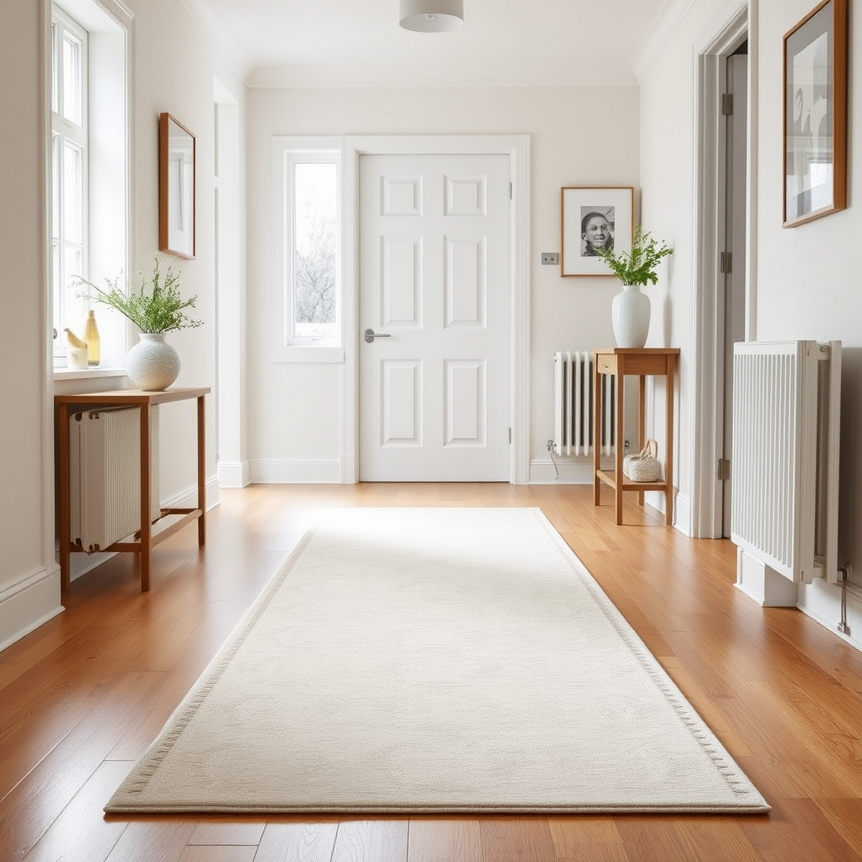
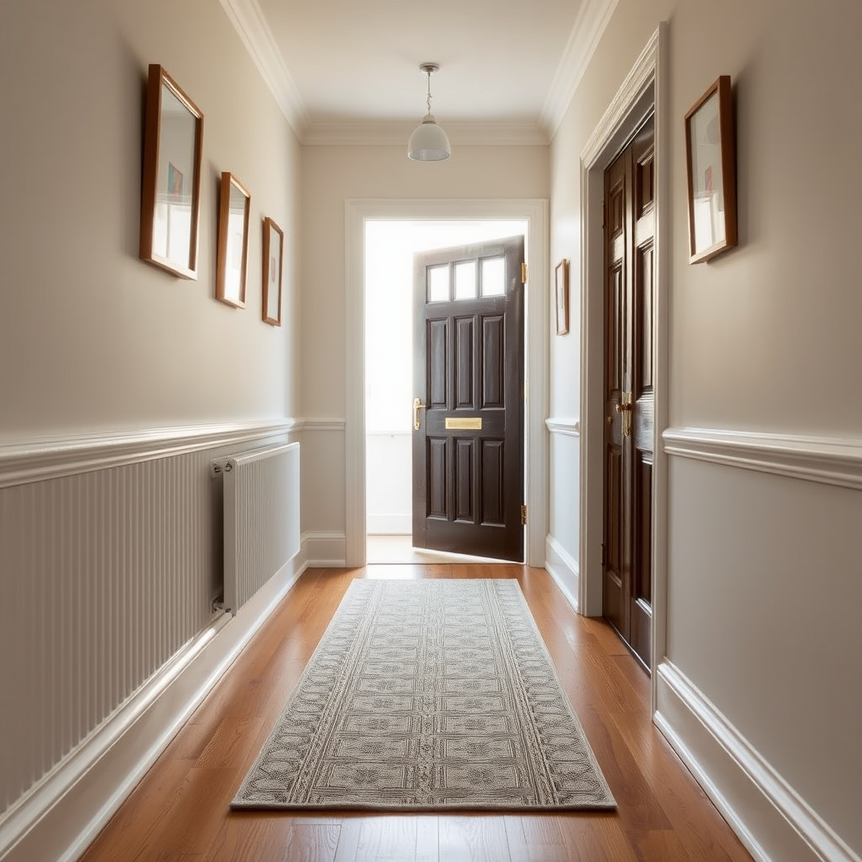
Select narrow runners wider than 60cm, aligning with typical UK stair widths. Use non-slip pads beneath stair runners for safety, preventing slipping on smooth wood or laminate surfaces. Durable materials like nylon or wool blends provide longevity in high-traffic zones.
Solving the Door Mat Dilemma: Perfect Sizes and Materials for UK Entrances
UK entrances often face the challenge of balancing size with practicality. Choose mats that cover the doorway width plus about 30cm on each side for effective dirt trapping. Common materials include:
- Coconut Fibre: Tough and excellent for scraping mud.
- Rubber: Waterproof and easy to clean.
- Microfibre: Absorbent with a soft feel.
- Wool: Durable with natural dirt repellence and warmth.
Ensure mats are weather resistant and fit snugly within the doorframe to avoid trip hazards.
Step-by-Step Guide to Finding Your Ideal Rug: From Measuring to Sampling
- Measure Precisely: Use a tape measure for floor space, considering furniture layout and walking paths.
- Consider Traffic Flow: High-traffic areas require durable, stain-resistant rugs.
- Evaluate Lighting: Natural light affects colour perception; test samples in different lighting, especially in UK homes where daylight varies.
- Assess Cleanability: Choose materials suited to your lifestyle—natural fibres vs synthetic blends.
- Order Samples: Many UK retailers offer rug samples. Lay them in your rooms for at least 24 hours to judge texture, colour, and feel before purchasing.
Seasonal Style Switch: Choosing Rugs that Adapt to UK Weather and Home Atmosphere
Adapt rugs to seasonal changes for comfort and style:
- Winter: Thick, insulated wool or shag rugs retain heat and create cosy interiors.
- Summer: Lightweight cotton or flatweave rugs keep rooms feeling fresh and cool.
- Transition Seasons: Choose muted tones or reversible rugs for versatility, combining durability with style resilience amid changing UK climates.
Avoid These Common UK Rug Buying Mistakes
- Ignoring Room Scale: Oversized rugs can swamp a small room; undersized rugs lose impact.
- Mismatch with Existing Decor: Avoid clashing colours or patterns that disrupt your room’s harmony.
- Skipping Rug Padding: Anti-slip pads not only prevent movement but also extend rug life and enhance floor protection.
- Neglecting Heating Considerations: Rugs affect underfloor heating efficiency—opt for thinner rugs with better heat conduction in such cases.
Eco-Friendly Choices: Navigating Sustainability in UK Rug Shopping
Seek sustainable rugs made from:
- Organic Cotton: Cultivated without harmful pesticides.
- Recycled Polyester: Reduces plastic waste.
- Natural Fibres: Wool, jute, seagrass with minimal processing.
Look for certifications integral in the UK and EU markets:
- Soil Association Organic Standard
- GOTS (Global Organic Textile Standard)
- OEKO-TEX Standard 100
These guarantee eco-friendly production, non-toxic dyes, and fair labour practices.
Maintain Your Rug’s Beauty: Essential Care Tips for UK Homes
- Vacuum Regularly: At least once a week to remove dust and prevent fibre wear.
- Rotate Periodically: Every 3-6 months to ensure even wear in sun-exposed areas.
- Address Spills Promptly: Blot spills immediately with a clean cloth; avoid rubbing.
- Professional Cleaning: Schedule deep cleaning annually or as needed, especially for wool rugs, to maintain vibrancy.
- Use Rug Pads: Protect floors, reduce slippage, and prolong rug life.
Comparison Table: Rug Materials – Benefits and Best Uses for UK Homes
| Material | Advantages | Best Room Use | Care Considerations |
|---|---|---|---|
| Wool Blend | Soft, durable, naturally stain-resistant, warm, sound-absorbing | Living rooms, bedrooms, hallways | Regular vacuuming, professional cleaning |
| Cotton | Easy to clean, breathable, affordable | Dining rooms, casual areas | Machine washable options available; spot clean |
| Jute & Seagrass | Eco-friendly, textured, durable | Hallways, dining rooms | Avoid moisture; vacuum regularly |
| Polyester/Recycled Fibre | Stain-resistant, budget-friendly, colourfast | High traffic areas, family rooms | Simple spot cleaning |
| Shag/High-Pile | Luxurious comfort, insulation | Bedrooms, lounge areas | Requires regular deep cleaning and vacuuming |
For a curated selection of quality rugs that combine durability, style, and eco-conscious materials ideal for UK homes, explore the range at RugStars UK Rugs. Their expert guidance and extensive collection ensure you find the perfect rug to enhance every room in your home.
Frequently Asked Questions
What’s the best rug material for UK homes?
Wool blends are ideal for durability, warmth, and stain resistance, making them particularly suited to the UK’s variable climate and family living conditions.
How do I measure my room for a rug?
Measure the floor area where you want the rug, factoring in furniture placement and leaving 20-60cm of space between the rug edges and the walls for balanced proportions.
Can rugs really reduce heating bills?
Yes. Rugs add insulation by trapping heat, which can reduce heating costs by up to £85 annually by helping retain warmth in your rooms.
How do I prevent slips on stair runners?
Use non-slip underlay pads designed specifically for stairs and ensure stair runners are securely fixed and regularly maintained to prevent accidents.
Which certifications guarantee eco-friendly rugs?
Look for Soil Association Organic Standard, GOTS, and OEKO-TEX certifications, which ensure rugs are produced sustainably, safely, and ethically.