Why Choose Rubber Mats for Your Garage and Utility Rooms in the UK?
Rubber mats are an excellent flooring choice for garages and utility rooms across the UK due to their outstanding durability and adaptability to local environmental conditions. UK homes frequently face dampness, cold temperatures, and occasional flooding, making traditional flooring materials prone to damage and mold growth. Rubber mats provide a resilient, waterproof barrier that resists moisture absorption, preventing slippery surfaces and deterioration.
Safety is a paramount advantage of rubber mats. Their natural slip-resistant texture reduces the risk of accidents, especially in wet or oily conditions typical of garages. This makes them ideal for households with children, pets, or elderly members.
Comfort is another critical benefit. Rubber mats offer excellent cushioning, reducing fatigue when standing for extended periods during DIY projects, laundry tasks, or gardening preparation. Additionally, they provide sound insulation, minimising noise from dropped tools or appliances.
In summary, rubber mats combine practicality with comfort, delivering a tough, safe, and low-maintenance flooring solution tailored for the variable UK climate and high-use areas such as garages and utility rooms.
Overview of Rubber Mat Types Suitable for Garages and Utility Rooms
In the UK market, several rubber mat types cater specifically to garage and utility room environments:
- Interlocking Rubber Tiles
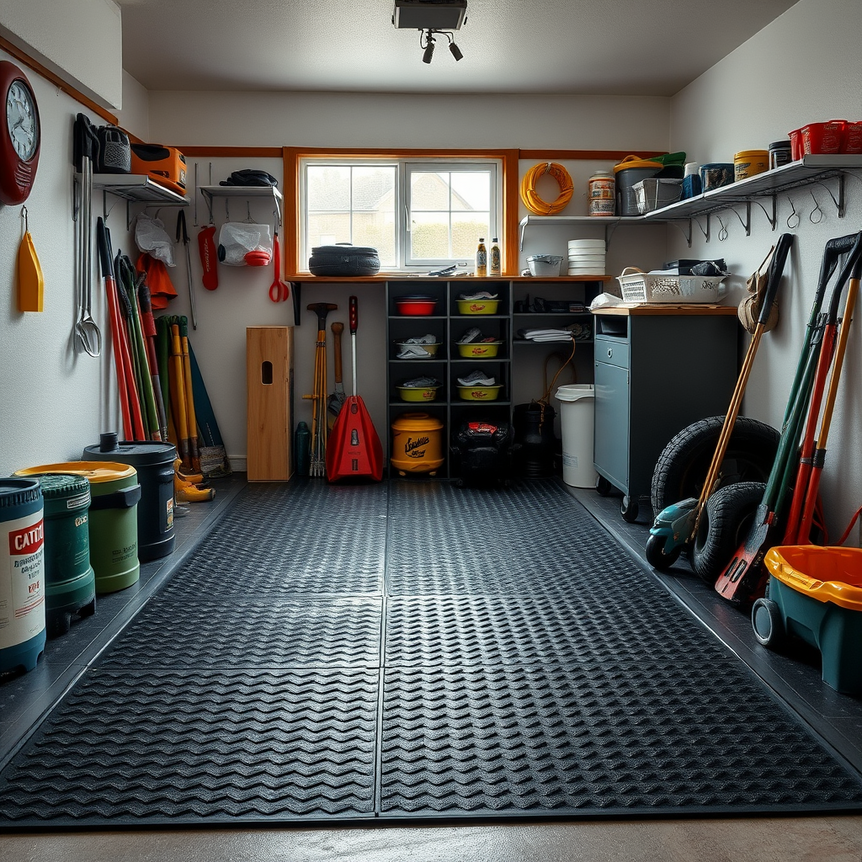
Ideal for DIY installation, these tiles snap together seamlessly, allowing easy sizing and flexible layout changes. Their modular nature enables quick replacement of damaged sections. Tiles often feature textured surfaces for enhanced grip and slip resistance. - Rubber Roll Mats
These continuous sheets cover larger areas without seams, reducing moisture ingress points. Roll mats are perfect for extensive utility room floors or garages with no irregular contours. They typically come in various thicknesses, offering customizable cushioning and durability. - Solid Rubber Sheets
Heavy-duty and highly durable, solid sheets are suitable for garage floors that handle vehicle weight or workshop equipment. Their dense composition offers superior resistance to wear, impact, and chemicals such as oil or solvents commonly found in these spaces. - Recycled Rubber Mats
Environmentally friendly options made from repurposed tyres or industrial rubber waste. Recycled mats retain the essential protective and cushioning properties of new rubber but help reduce environmental impact. They often have a rugged appearance suited to utilitarian spaces.
Each type offers unique benefits, with interlocking tiles prioritising ease of use, rolls providing seamless coverage, solid sheets maximising durability, and recycled rubber appealing to sustainable home improvement goals.
How to Select the Right Rubber Mat for Your Space and Needs
Choosing the optimal rubber mat involves evaluating several key factors to suit both your space and lifestyle:
- Measure Your Floor Area Accurately
Calculate the total square footage or square metres to determine how many tiles or what length of roll you’ll require. Accurate measurements prevent wastage and ensure coverage. - Determine Mat Thickness
Thickness influences cushioning and durability. For garages where vehicles or heavy equipment are stored, 6–10 mm thick mats offer excellent protection. Utility rooms with moderate foot traffic might only require 3–6 mm thickness for sufficient comfort and wear resistance. - Evaluate Slip Resistance Needs
Look for mats with textured or patterned surfaces to maximise grip, especially if your floor regularly gets wet from rain, vehicle wash-downs, or spills. - Assess Environmental Impact
If sustainability matters, seek recycled rubber options or mats manufactured with eco-friendly processes certified under UK standards, complementing your green home improvement efforts. - Set a Budget
Prices vary depending on thickness, size, and brand. While higher initial investment in durable mats may seem costly, it reduces replacement frequency and overall cost in the long run.
By balancing these considerations, you ensure your rubber mat matches both functional needs and financial parameters for a well-protected, comfortable space designed for UK conditions.
Installation Best Practices for Rubber Mats in UK Homes
Proper installation is crucial to extending the life and enhancing the performance of your rubber mats. Follow these UK-specific best practices:
- Prepare the Floor Thoroughly
Clean the surface to remove dust, grease, and moisture. In colder months, use a dehumidifier or heater to ensure floors are completely dry before installation, minimising mould risk. - Acclimatise the Mats
Allow rolls or tiles to sit at room temperature for at least 24 hours to adapt before fitting. This prevents expansion or contraction problems later due to temperature fluctuations. - Use a Suitable Adhesive When Needed
For roll mats or sheets installed on uneven floors, apply a UK-approved rubber adhesive designed for the specific floor type (concrete, tiles, wood) to prevent movement and uplift. - Install Modular Tiles with Precision
Align interlocking tiles carefully to form tight joints. Using a rubber mallet helps secure connections without damaging the edges, ensuring uniform appearance and durability. - Trim Edges Neatly
Use a sharp utility knife to cut mats precisely around corners, doorways, or obstacles, ensuring a professional, clean finish.
Following these guidelines guarantees your rubber mats deliver a secure, long-lasting flooring solution resilient to the damp and cold typical of UK homes.
Maintaining and Cleaning Your Rubber Mats for Long-Lasting Use
Regular upkeep helps preserve the appearance, safety, and functionality of rubber mats:
- Routine Cleaning
Sweep or vacuum frequently to remove dust, grit, and debris. Mop mats with warm water and a mild detergent specially formulated for rubber surfaces to maintain integrity. - Avoid Harsh Chemicals
Steer clear of solvents, bleach, or abrasive cleaners which can degrade rubber fibres over time. For stubborn stains, use British-available specialised rubber cleaners that are safe and effective. - Dry Mats Thoroughly
After cleaning, air dry mats or wipe down with a dry cloth to prevent moisture trapping beneath, which could encourage mould growth or odours. - Inspect for Damage
Periodically check mats for cracks, tears, or excessive wear, particularly in high-traffic zones. Replace damaged sections promptly to maintain safety and performance. - Seasonal Care
During colder months, ensure garages and utility rooms are adequately ventilated to minimise condensation under mats, prolonging their lifespan and reducing damp risks.
A disciplined maintenance routine will keep your rubber mats safe, comfortable, and durable for years to come.
Comparing Popular Rubber Mat Options for UK Garages and Utility Rooms
| Type | Price Range (GBP/m²) | Pros | Cons | Best For |
|---|---|---|---|---|
| Interlocking Tiles | £15–£30 | Easy DIY fit; modular; good grip | Can shift without adhesive | Home garages; utility spaces |
| Roll Mats | £10–£25 | Seamless coverage; easy cleaning | Requires adhesive on uneven floors | Larger utility rooms; workshops |
| Solid Rubber Sheets | £20–£40 | Heavy-duty; chemical resistant | Heavier; professional fitting recommended | Workshops; vehicle garages |
| Recycled Rubber Mats | £12–£28 | Eco-friendly; durable; cost-effective | Appearance less refined | Sustainable home improvements |
This comparison enables UK homeowners to choose wisely based on budget, durability, and environmental priorities for their garage or utility room flooring needs.
Frequently Asked Questions about Rubber Mats for Garages and Utility Rooms
What thickness of rubber mat is best for a UK garage floor?
A thickness of 6–10 mm offers durable protection against vehicle weight and tool impacts typical of UK garages, ensuring long-lasting performance.
Are rubber mats suitable for damp or cold environments typical in the UK?
Yes. Rubber mats are water-resistant and provide insulation against cold concrete floors, making them ideal for the often damp and chilly garages and utility rooms found across the UK.
Can rubber mats be installed over concrete or tiled garage floors?
Absolutely. Rubber mats can be placed over concrete or tiled surfaces. Using an appropriate adhesive ensures stability, especially on uneven floors, preventing movement and improving safety.
How often should rubber mats be cleaned or replaced?
It is advisable to clean mats monthly or as needed, depending on usage. With proper maintenance, rubber mats generally last between 5 to 10 years before replacement may be necessary.
Are recycled rubber mats environmentally friendly and safe to use indoors?
Yes. Recycled rubber mats help reduce landfill waste, are manufactured to UK safety standards, and are safe for indoor use when correctly sealed and maintained.
For quality rubber mats tailored specifically for UK garage and utility room conditions, visit Rugstars’ rubber mat selection to find your ideal flooring solution today.